Choosing a cat carrier is an important decision for you and your cat; even if you only use it occasionally for veterinary check-ups. You need to make sure that your cat is happy and comfortable in it but also that it’s safe, provides a sense of security, is easy to clean and that your cat can get in and out easily. With all the different types of cat carriers available, how do you choose the right one for your cat?
Which Type of Cat Carrier?
No Carrier
Not having a carrier at all is an obvious no-no! Your cat may be the happiest, most well-behaved cat ever, but it only takes one thing to spook her if you’re carrying her in your arms, and all hell could break loose. It’s not safe for you or your cat, and why take that risk with your precious cargo?
Wire Cage
A wire cage cat carrier is better than no carrier at all, but it isn’t ideal. Your cat will be caged, and likely to feel trapped and fearful. A wire carrier won’t be particularly comfortable for her, and if she has an accident it’s not going to be contained at all.

Wicker Basket
Wicker baskets may look nice, but they’re not the most secure cat carriers. They’re also very difficult to clean, keep in mind that if you’re taking your cat to and from the vet it may be because she’s ill, so if she’s sick or soils in the basket, it’s going to be a real struggle to clean up.
Soft-Sided Carrier
Although there are many airline approved soft-sided cat carriers on the market, they generally aren’t very sturdy, and if the bottom isn’t firm, it’s going to be very uncomfortable. Just imagine how you’d feel lying on a blanket and being carried around! The sides are designed to cave in (so they can be folded and stored), they’re difficult to clean if your cat has an accident, and you risk your cat trying to claw her way out of it if she’s scared.
Cardboard Box
You may have brought your cat home in a cardboard carrier when you adopted her, but they should only ever be a temporary measure. Cardboard carriers aren’t at all secure – if they get damp they’ll fall apart, and it’s easy for cats to scratch right through them.
Plastic Carrier
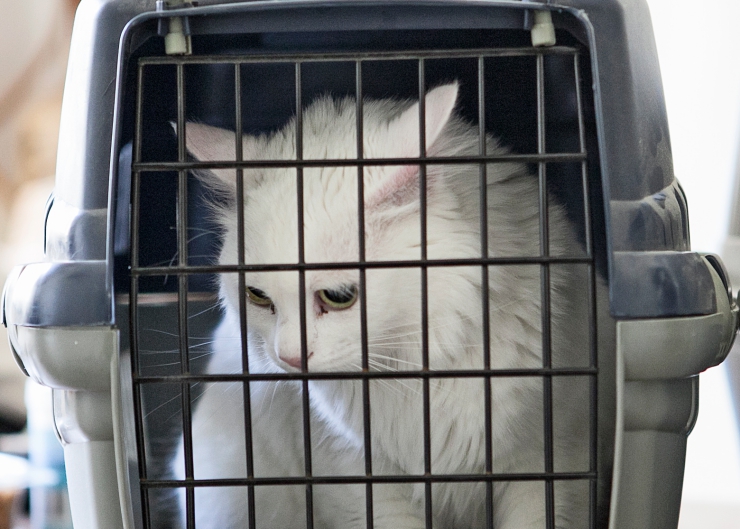
Plastic cat carriers are my personal choice, as they’re sturdy, durable and easy to clean. They’re cost-effective too – they’ll usually last as long as your cat does, if not longer. We line our cat carriers with a towel for added comfort, which can be washed as needed. Plastic cat carriers are also airline approved if you’re taking your cat travelling with you, although do check with the individual airline you’re flying with.
Other Considerations When Choosing the Right Cat Carrier
The Size
A carrier that’s too small obviously won’t be comfortable for your cat, but too big and all that space when it’s moving around might scare her. Your cat needs to feel safe and secure, because if she’s already nervous about going to the vet, for example, she’ll feel much better being able to curl up tightly in a corner. Another issue when the carrier is too big is the weight of your cat; you’ll struggle with balancing the carrier when you’re carrying it.
How Many Cats?
If you’ve got multiple cats, it’s important to use a separate carrier for each one, because you never know when you’re going to have to take them out together. Even if they’re the best of friends at home, the stress of the journey might cause them to lash out at each other, which would be awful for them and for you.

The Openings
Carriers with an opening at the top make it easier for you to put your cat into, especially if your cat freaks out when she realises she’s going into the carrier! If you only have one carrier that opens at the front, you can still turn it on its bottom to pop her into it. Carriers where the entire top half comes off are a good choice for nervous cats, because it means your cat can stay within the safety of the carrier at the vet clinic, including during the examination.
Choosing the right cat carrier for your cat means that taking her out and about will be a lot easier, for the both of you!

